

Introduction
Table of Contents
ToggleInsomnia, or sleeplessness, is a common sleep disorder affecting millions worldwide. It leads to difficulty falling asleep, staying asleep, or waking up too early. In today’s fast-paced world, sleepless nights are no longer rare. As per Dr. Tanu Raghava, a Senior Homeopathic Consultant and Nutritionist, chronic insomnia can affect not just your energy levels but also your emotional and physical health.
Culprit Behind Insomnia
The primary culprit behind insomnia is a disturbed mind. Constant overthinking, stress, anxiety, and lifestyle irregularities disrupt the body’s natural sleep rhythm. Excessive screen exposure before bedtime and poor sleep hygiene further worsen the condition.
Causes of Insomnia
- Psychological Factors: Stress, anxiety, depression, grief, or overwork
- Physical Factors: Pain, hormonal imbalance, thyroid issues, or chronic diseases
- Lifestyle Causes: Irregular sleep patterns, excessive caffeine or alcohol intake, and late-night meals
- Environmental Causes: Noise, uncomfortable bed, improper room temperature, or excessive light
- Medication Induced: Certain antidepressants, steroids, or stimulants can cause sleep disturbances
Types of Insomnia
Transient Insomnia: Lasts a few days, often due to stress or travel.
Short-Term Insomnia: Persists for up to three weeks.
Chronic Insomnia: Occurs for more than three nights a week for over three months.
Symptoms of Insomnia
- Difficulty falling asleep despite tiredness
- Waking up frequently during the night
- Feeling unrefreshed even after sleep
- Morning headaches and fatigue
- Poor concentration and irritability
- Daytime drowsiness
Scientific Evidence Supporting Homeopathy in Insomnia
Several studies have demonstrated the positive effects of homeopathy in treating insomnia. A study published in the European Journal of Integrative Medicine showed that individualized homeopathic remedies significantly improved sleep quality without side effects. Unlike sedatives that induce artificial sleep, homeopathy works on the root cause – balancing mental, emotional, and physical health. Dr. Tanu Raghava explains that homeopathy helps restore the body’s natural rhythm and calms the nervous system gently.
Role of Homeopathy in Insomnia
Homeopathy offers a natural and holistic approach to treating insomnia by addressing the underlying causes like stress, anxiety, hormonal imbalance, or digestive disturbances. It strengthens the body’s inherent healing mechanism and promotes natural sleep without dependency or side effects. According to Dr. Tanu Raghava, individualized remedies chosen after understanding the patient’s personality, habits, and emotional state yield lasting results.
Homeopathic Medicines
1. Coffea Cruda
Highlighted Symptom: Sleeplessness due to overactivity of mind.
- Excessive mental excitement, racing thoughts at bedtime
- Oversensitivity to noise and light
- Restlessness and inability to relax
- Better after a short nap but wakes up soon again
2. Nux Vomica
Highlighted Symptom: Insomnia due to overwork, stress, or stimulants.
- Sleeplessness after mental exertion or late-night work
- Irritability and hypersensitivity
- Awakens around 3 a.m. and finds it hard to sleep again
- Common in those dependent on coffee or alcohol
3. Arsenicum Album
Highlighted Symptom: Sleeplessness with anxiety and restlessness.
- Fear of disease or death at night
- Wakes up around midnight with worries
- Feels exhausted but cannot fall asleep
- Better by warmth and company
Other Important Remedies
- Sleep disturbed by vivid dreams
- Restless tossing and turning
- Worse in a warm room, better in fresh air
- Suits mild, emotional, and weepy individuals
- Insomnia before anticipation or exams
- Drowsy yet unable to sleep
- Trembling from exhaustion
- Suits timid, nervous patients
- Sleeplessness from grief, disappointment, or shock
- Frequent sighing and deep emotional disturbance
- Jerking of limbs during sleep
- Feels worse from strong emotions
7. Sulphur
- Disturbed sleep due to itching or heat
- Wakes early with ideas crowding the mind
- Restless, dreams of fire or quarrels
- Suitable for intellectual and creative individuals
Importance of Correct Diet
Dr. Tanu Raghava emphasizes that a proper diet helps regulate hormones like melatonin and serotonin, crucial for sleep. Nutrient-rich foods calm the nervous system, reduce stress, and promote deep rest.
Foods to Eat:
- Fruits: Bananas, cherries, kiwis, and apples (rich in tryptophan and melatonin)
- Vegetables: Spinach, sweet potatoes, carrots, and broccoli (high in magnesium and B vitamins)
- Pulses: Moong dal, lentils, and chickpeas (contain amino acids aiding relaxation)
- Nuts: Almonds, walnuts, and pistachios (natural melatonin sources)
- Seeds: Pumpkin and sunflower seeds (contain magnesium and zinc)
- Dairy: Warm milk or buttermilk before bed promotes sleep
- Herbal Teas: Chamomile, lavender, and valerian root tea before bedtime
Foods to Avoid:
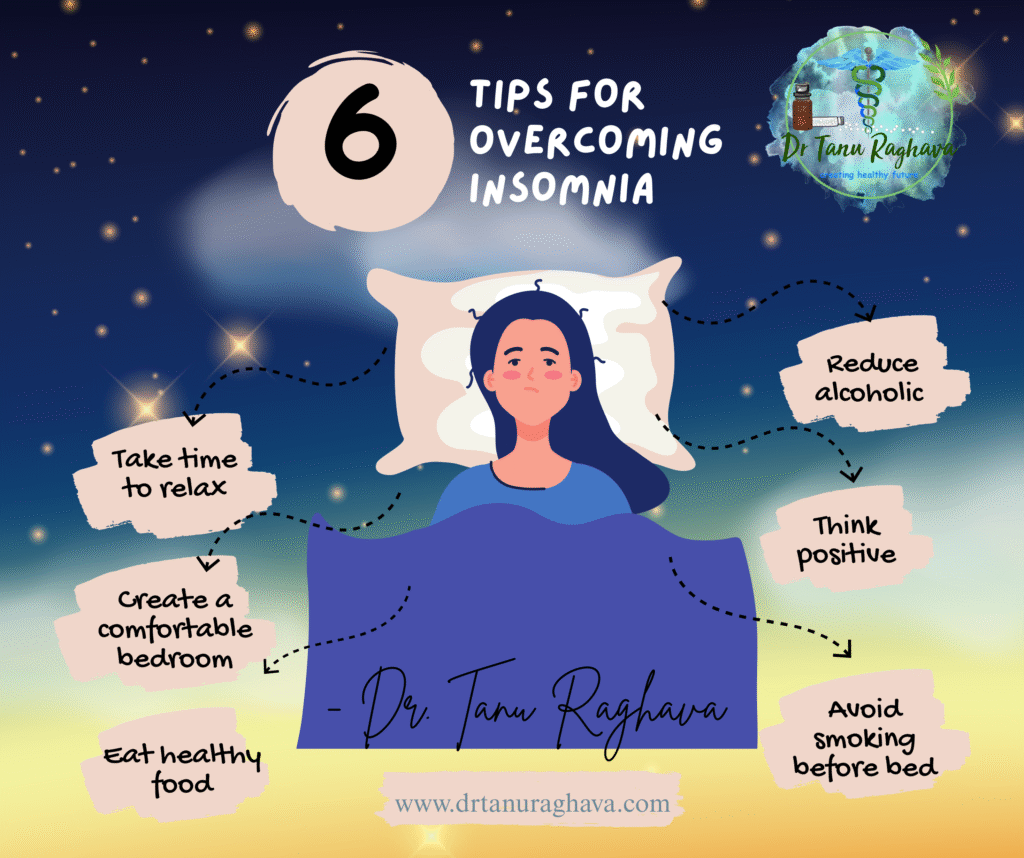
- Caffeine-containing drinks (coffee, tea, cola) after 5 p.m.
- Alcohol and tobacco
- Spicy and heavy meals at night
- Processed and sugary foods
- Carbonated beverages
Do’s and Don’ts
Do’s:
- Maintain a regular sleep schedule—same time every day
- Practice deep breathing before bed
- Keep your bedroom dark, quiet, and cool
- Engage in light physical activity or yoga daily
- Limit screen time 1 hour before bed
Don’ts:
- Avoid sleeping during the day
- Don’t consume caffeine or nicotine in the evening
- Avoid checking the clock repeatedly while trying to sleep
- Don’t use your bed for work or phone use
- Avoid overthinking before bedtime—try journaling instead
Top 3 Yoga Exercises for Better Sleep
1. Shavasana (Corpse Pose)
Lie flat on your back, arms by your side, palms facing upward. Close your eyes and take deep, slow breaths. Relax every muscle consciously, from toes to head. Stay for 5–10 minutes. It calms the nervous system and prepares the body for deep rest.
2. Viparita Karani (Legs-Up-the-Wall Pose)
Sit near a wall, lie back, and extend your legs upward resting on the wall. Keep your arms relaxed beside you. Focus on your breathing for 10 minutes. It reduces fatigue and balances blood circulation, promoting calmness.
3. Baddha Konasana (Bound Angle Pose)
Sit with your spine straight and soles of feet touching each other. Hold the feet with both hands and breathe deeply. This pose improves pelvic circulation and releases emotional tension, easing the transition into sleep.
Bonus Tip
Apply a few drops of lavender essential oil on your pillow before sleeping. The soothing aroma helps relax your mind and promotes deep sleep naturally.
Conclusion
Insomnia isn’t just about sleepless nights—it’s about restoring inner peace and balance. Homeopathy, combined with mindful eating and yoga, offers a holistic way to reclaim restful nights. Dr. Tanu Raghava believes that understanding the root cause and aligning the mind-body connection is the key to healing insomnia naturally and permanently.
FAQ
Q1. Can homeopathy permanently cure insomnia?
Ans: Yes, with the right constitutional remedy chosen by a skilled homeopath like Dr. Tanu Raghava, homeopathy can permanently cure insomnia by treating the root cause.
Q2. How long does it take for homeopathic medicine to improve sleep?
Ans: Improvement is usually seen within a few weeks, depending on the severity and chronicity of insomnia.
Q3. Can I take homeopathy along with my current sleep medication?
Ans: Yes, homeopathic medicines are safe and can be taken alongside conventional treatments under professional supervision.
Q4. Is insomnia related to diet and lifestyle?
Ans: Absolutely. Poor diet, excessive caffeine, and erratic sleep schedules often trigger or worsen insomnia.
Q5. Is homeopathy safe for children or elderly with insomnia?
Ans: Yes, homeopathy is gentle and safe for all age groups, offering effective relief without addiction or side effects.