
Introduction
Table of Contents
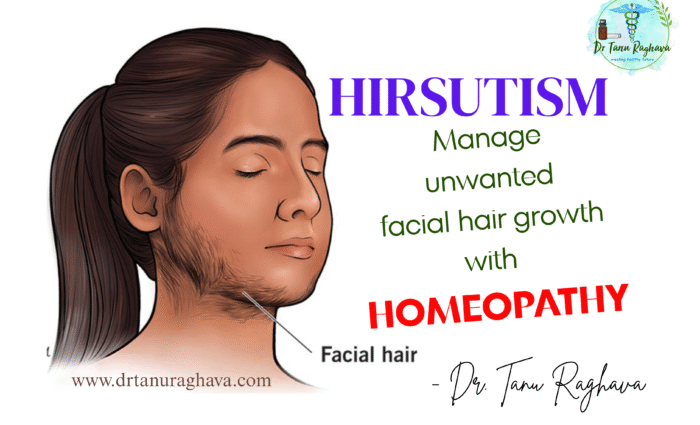
ToggleHirsutism refers to excessive, male-pattern hair growth in women, especially on the face, chest, and back. It often causes emotional distress, affecting self-esteem and social confidence. While hormonal imbalance is the main culprit, modern lifestyle factors and poor diet also contribute significantly. Through the holistic approach of homeopathy, as explained by Dr. Tanu Raghava, women can achieve hormonal balance and long-term improvement without harmful side effects.
Culprit Behind Hirsutism
The root cause of hirsutism lies in the excessive production or sensitivity to androgens (male hormones), particularly testosterone. These hormones stimulate the hair follicles, converting soft, fine vellus hair into thick, coarse terminal hair. According to Dr. Tanu Raghava, hormonal imbalance caused by PCOS (Polycystic Ovarian Syndrome), adrenal dysfunction, or insulin resistance is often responsible for this condition.
Causes of Hirsutism
- Polycystic Ovarian Syndrome (PCOS): The most common cause, where the ovaries produce excessive androgens.
- Adrenal gland disorders: Such as Cushing’s syndrome or congenital adrenal hyperplasia.
- Obesity: Excess fat leads to increased insulin and androgen levels.
- Medications: Certain drugs like anabolic steroids or minoxidil can trigger hair growth.
- Family history: Genetic predisposition plays a key role.
- Insulin resistance: High insulin increases androgen production from ovaries.
Types of Hirsutism
- Idiopathic Hirsutism: No identifiable cause, but increased sensitivity to androgens.
- Androgenic Hirsutism: Caused by elevated androgen levels, usually due to PCOS or adrenal issues.
- Iatrogenic Hirsutism: Drug-induced, resulting from prolonged use of hormone-related medications.
Symptoms of Hirsutism
- Coarse, dark hair growth on face, chest, abdomen, or back
- Irregular menstrual cycles
- Acne and oily skin
- Hair thinning on scalp
- Weight gain or difficulty losing weight
- Emotional distress or low confidence
Scientific Evidence Supporting Homeopathy in Hirsutism
Several studies have highlighted the efficacy of individualized homeopathic treatment in hormonal and metabolic disorders like PCOS and hirsutism. Research published in The Journal of Alternative and Complementary Medicine suggests that homeopathic remedies regulate endocrine balance, reduce androgen activity, and improve menstrual regularity. Dr. Tanu Raghava explains that homeopathy acts by correcting the underlying hormonal dysfunction rather than merely treating external hair growth, leading to sustainable results without chemical interference.
Role of Homeopathy in Hirsutism
Homeopathy works on the principle of internal balance — it harmonizes the endocrine system, corrects metabolic disturbances, and restores natural rhythm to menstrual and hormonal functions. Remedies are chosen based on a patient’s physical constitution, emotional pattern, and symptom profile. According to Dr. Tanu Raghava, individualized homeopathic treatment not only reduces unwanted hair growth but also improves skin texture, regulates menses, and enhances emotional well-being.
Homeopathic Medicines for Hirsutism
Top Three Important Remedies
1. Sepia Officinalis
Highlighted Symptom: Excessive hair growth with irregular or suppressed menses.
Redline Symptoms:
- Aversion to family and social interaction
- Bearing down sensation in pelvic region
- Acne and pigmentation on face
- Hair growth on chin and upper lip due to hormonal imbalance
2. Thuja Occidentalis
Highlighted Symptom: Hair growth associated with polycystic ovaries and oily skin.
Redline Symptoms:
- Acne with greasy skin
- Irregular menstrual cycles
- History of vaccination or hormonal medication
- Excessive facial hair with warts or skin eruptions
3. Natrum Muriaticum
Highlighted Symptom: Hair growth with hormonal irregularity aggravated by emotional stress.
Redline Symptoms:
- Menstrual irregularities with delayed or scanty flow
- Emotional suppression and sadness
- Hair growth on face and chest with dryness of skin
- Craving for salty food
Other Important Remedies
4. Pulsatilla Nigricans
Highlighted Symptom: Excessive hair growth in mild, gentle girls with irregular, delayed menses.
Redline Symptoms:
- Changeable mood and mild temperament
- Dislike for fatty food
- Absence of thirst
- Amenorrhea or scanty periods
5. Calcarea Carbonica
Highlighted Symptom: Hair growth with obesity and sluggish metabolism.
Redline Symptoms:
- Profuse sweating on the head
- Cold, clammy hands and feet
- Craving for eggs and indigestible food
- Fatigue and slow metabolism
6. Lachesis Mutus
Highlighted Symptom: Facial hair with irregular, painful menstruation.
Redline Symptoms:
- Intolerance to tight clothing
- Left-sided complaints
- Menstrual flow aggravation after sleep
- Hot flushes and irritability
7. Oleum Jecoris (Cod Liver Oil)
Highlighted Symptom: Unwanted hair growth with dry, rough skin and hormonal disturbances.
Redline Symptoms:
- Poor calcium absorption
- Weak nails and hair
- Irregular menses
- General debility and weakness
Importance of Correct Diet in Hirsutism
Dr. Tanu Raghava emphasizes that diet plays a major role in balancing hormones and reducing androgen excess. A low-glycemic, anti-inflammatory, and nutrient-rich diet supports homeopathic treatment effectively.
Foods to Eat:
- Fruits: Apples, papaya, pomegranate, berries, kiwi
- Vegetables: Broccoli, spinach, kale, bottle gourd, ridge gourd, methi
- Pulses: Moong dal, masoor dal, lentils, chickpeas
- Nuts & Seeds: Almonds, walnuts, flax seeds, chia seeds, sunflower seeds
- Whole grains: Oats, quinoa, brown rice, barley
- Healthy fats: Olive oil, coconut oil, ghee in moderation
- Drinks: Green tea, herbal teas, warm water with lemon
Foods to Avoid:
- Refined carbohydrates: White bread, pastries, sweets
- Sugary drinks: Cold drinks, packaged juices
- Processed & fried foods
- Dairy products: Especially high-fat milk and cheese
- Caffeine and alcohol
- Soy products: As they can mimic estrogen and disturb hormone balance
Do’s and Don’ts (Lifestyle Modifications)
Do’s:
- Exercise daily for at least 30–45 minutes.
- Maintain a healthy body weight to regulate insulin and hormone levels.
- Follow a sleep schedule (7–8 hours).
- Practice yoga and meditation for stress control.
- Keep skin clean and exfoliated naturally.
Don’ts:
- Avoid chemical hair removal creams and harsh waxing.
- Don’t skip meals or follow crash diets.
- Avoid late-night snacking.
- Limit screen time and stress exposure.
- Refrain from self-medicating with hormonal pills.
Top 3 Yoga Exercises for Hirsutism
1. Surya Namaskar (Sun Salutation)
A complete body workout that balances metabolism, detoxifies the body, and enhances hormonal balance. Perform 12 sets daily with slow, deep breathing.
2. Bhujangasana (Cobra Pose)
Lie on your stomach, keep palms near shoulders, inhale, and lift your upper body. Hold for 15 seconds and exhale slowly. This stimulates adrenal glands and regulates hormones.
3. Dhanurasana (Bow Pose)
Lie on your stomach, bend your knees, hold your ankles, and lift your chest and legs simultaneously. Hold for 10–15 seconds. It improves digestion and balances reproductive hormones.
Bonus Tip by Dr. Tanu Raghava
Apply a homemade natural pack made of gram flour, turmeric, and rose water on the affected area twice a week. It helps reduce hair density and improves skin texture over time, complementing internal homeopathic treatment.
Conclusion
Hirsutism can be physically and emotionally challenging, but with holistic care — including individualized homeopathy, balanced nutrition, yoga, and proper lifestyle management — lasting improvement is possible. Dr. Tanu Raghava emphasizes that treating the root cause, not just symptoms, helps women regain hormonal harmony and confidence naturally.
FAQ
Q1. Can homeopathy completely cure hirsutism?
Ans: Yes, with individualized remedies and lifestyle correction, homeopathy can gradually reduce unwanted hair growth and restore hormonal balance.
Q2. How long does it take to see improvement with homeopathy?
Ans: Results usually appear within 3–6 months, depending on the severity and hormonal balance of the patient.
Q3. Is homeopathic treatment safe for long-term use?
Ans: Absolutely. Homeopathic medicines are natural, non-toxic, and safe for prolonged use under a physician’s guidance.
Q4. Can diet alone help reduce hair growth?
Ans: Diet helps control insulin and androgen levels, which reduces new hair growth, but complete recovery requires combined homeopathic care.
Q5. Does stress worsen hirsutism?
Ans: Yes, stress triggers hormonal imbalance, raising androgen levels. Regular relaxation, yoga, and meditation are essential for healing.